Adam Dadson BA, RMT
This article is for you if you
- Have been recently injured and are figuring out what what decisions to make.
- Are suffering the effects of long-term chronic pain, from an obvious injury or from no apparent source.
- Are in the process of untangling all the out-of-date and magical beliefs taught to you by your rehab program.
Two Universal Rehab Goals
Goal #1: Manage Symptoms
Goal #1 can be achieved with many different activities. Massage, heat, cold, TENS, and joint mobilisations are just a few examples. Every passive activity performed by a massage therapist fits into this category—Swedish, deep tissue, fascial, neuromuscular, trigger points, and Rolfing all help to temporarily reduce symptoms. Realistically, anything that makes you or your client personally feel better works, and that does not always follow the patterns the industry expects.
For example, when I was in school, an instructor told us about a mentor who found that rubbing a fake rabbit’s foot reduced their intermittent chronic pain. Every RMT I have encountered is exceedingly competent at this aspect of recovery. We are great at using our hands to temporarily reduce muscle tone, ease feelings of tension, and increase range of motion.

Temporarily modifying how a task is performed is also extremely helpful. Bending over hurts? Try squatting. Does your wrist hurt with mouse work? Try an ergonomic mouse. Does your neck hurt during university lectures? Try sitting in a different seat or using a novel posture.
Ask yourself how a task could be done differently, then give it a try. If it makes things feel better, keep doing it. If it does not, try something else. Getting a second set of eyes to help navigate options can really help. It is something every rehab professional should be competent at, and honestly, most pain sufferers figure this out on their own eventually. Guess and test happens pretty naturally when you are in pain.
Goal #2: Restore Functionality
Goal #2 can feel more complicated, and it can be much harder to find a practitioner who does this part of rehab well. Restoring functionality is done with graded exposure.
Graded exposure starts by assessing what a body is capable of. Can any weight be moved? If so, how much? Do body-weight activities hurt? Are activities of daily living affected? Which ones?
After current functionality is established, a quality rehab professional collaborates with their client to select simple, safe, but challenging movements to practice. To put it simply: practice what you are bad at. When movements become too easy, make them harder. This process repeats until the injured body is practising movements beyond what is needed for daily life.
If you need to lift twenty pounds overhead frequently for work, then your practice exercises must exceed twenty pounds. The more you can lift overhead in training, the more tolerable frequently lifting twenty pounds at work will be. We know bodies adapt both neurologically and physiologically to movements that stress the system.
This is why I practice massage therapy out of a gym. Regardless of how strong a client needs to be for work or recreation, I know I have access to enough weight to get them where they need to be. I have seen clients starting at five-pound dead-lifts progress to 185-pound dead-lifts without pain flare-ups before showing signs of physical adaptation.
Can your rehab team provide this level of weight when necessary? If not, why not?
Food for Thought
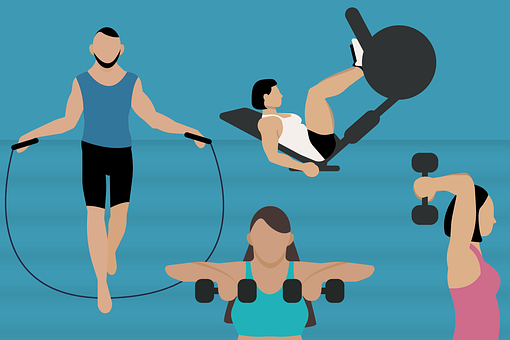
Let us say a person can carry two grocery bags from the car up the stairs to the kitchen with mild discomfort in their back. They can pick up their medium-sized Black Lab and put her into the trunk of the car with moderate discomfort. The discomfort never goes away, and fast, unexpected, or more heavily weighted activities frequently cause debilitating pain. So they go see a rehab expert and are provided pain-free static abdominal exercises to do daily.
Is that enough load to stimulate change?
Maybe, but likely not. We know they can tolerate lifting their lab (about twenty pounds) and carrying groceries (let us say ten pounds) for a decent distance. If both those activities are tolerable, easy abdominal exercises likely will not improve movement tolerance. Plus, they are static holds with no movement. If there is no movement, the body will not learn to tolerate moving again; instead, it will learn to tolerate being immobile with intense muscle contraction—obviously not the person’s goal.
Having our theoretical person practice lifting twenty pounds plus and carrying ten pounds plus an appropriate amount every week would be much more likely to cause adaptation. It provides the nervous system an opportunity to relearn how to tolerate moving loads again, to trust it can move without injury, and to discover that current pain responses are not accurate to the body’s actual physical capacity.
Conclusion
Living with pain can make the world feel smaller, turning simple movements into a constant negotiation with discomfort. Passive treatments offer a welcome reprieve, but true recovery means reclaiming your life, rebuilding your trust in your body, and discovering that you are adaptable, not fragile. Quality rehab professionals help people move beyond the permanent need for appointments, guiding choices that return them to a full, active life.
If you are ready to stop guessing and start building real, lasting capacity, subscribe to the blog for more insights on movement rehabilitation and chronic pain. To take the next step in your practice or your recovery, Sign up to be contacted when the Really Simple Rehab Continuing Education course drops (TBD).

 778-554-0173
 info@convergerehab.ca